
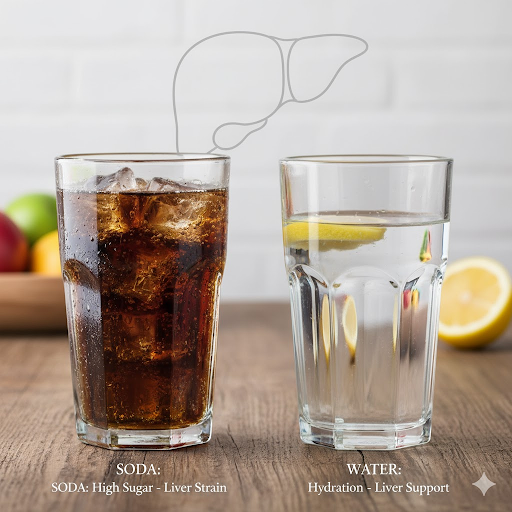
A new study reveals that consuming just one can of diet or regular soda per day could increase the risk of metabolic dysfunction-associated steatotic liver disease (MASLD) — a condition where fat builds up in the liver independent of alcohol use.
While diet sodas are often marketed as healthier alternatives, new evidence suggests they may be just as harmful to liver health as their sugar-sweetened counterparts.
The findings, presented at UEG Week 2025, the annual congress of United European Gastroenterology, underscore that even artificially sweetened drinks may carry liver risks.
>>>Check out Study Links Regular Cycling to Reduced Dementia Risk<<<
Study Details: One Can a Day, Higher Risk
Researchers examined data from over 103,000 adults in the UK Biobank. None had liver disease at baseline, and they were tracked for more than 10 years. During that time, 949 participants developed MASLD, and 103 died from liver-related causes.
Key findings:
- Drinking more than 330 grams (around one can) of either beverage type daily was linked to a 50–60% higher risk of MASLD.
- Both sugar-sweetened and low-calorie sodas correlated with higher liver fat.
- Artificially sweetened drinks showed a dose-dependent link with liver-related mortality — the more consumed, the higher the risk.
>>>See also Salmon and Cholesterol: What Science Says About Its Heart-Healthy Benefits<<<
Replacing Soda with Water May Help
The same research found that replacing one can of soda a day with water reduced the risk of MASLD by nearly 15%.
“Our findings show that low- or non-sugar-sweetened beverages, often seen as safer, may not be entirely risk-free,” said Lihe Liu, lead researcher at Soochow University, China.
This adds to growing evidence that both added sugars and artificial sweeteners can disrupt liver metabolism and increase fat accumulation over time.
>>>Check out What Are AFRID Safe Foods—and How Can You Add More to Your Menu<<<
Experts Weigh In
Registered dietitian Karen Z. Berg, MS, RD, who wasn’t involved in the study, emphasized:
“Many assume diet drinks are better, but both have been linked to liver issues. Stick to water, sparkling water, or fruit-infused options instead.”
She added that “zero sugar” doesn’t always mean “healthy”, as diet sodas often contain chemicals that can stress the liver and other organs.
Limitations and Next Steps
Since the study has not yet been peer-reviewed, its conclusions should be interpreted with caution. Beverage intake was self-reported, which might not fully reflect actual consumption. Additionally, the UK Biobank sample primarily includes white participants, which may limit generalizability.
Future research aims to clarify how artificial sweeteners affect the liver and whether different types of sweeteners carry different risks.
The Takeaway: Water Wins Every Time
Even though more studies are needed, experts agree on one point — water remains the best choice for overall and liver health.
Swapping soda, even diet versions, for water or natural alternatives like herbal tea or sparkling water could significantly reduce your risk of fatty liver disease and improve long-term wellness.
News Desk news.uloscah.com