
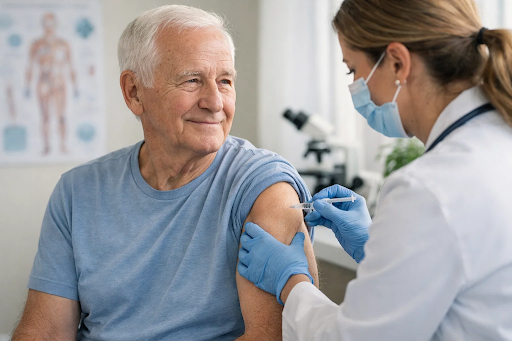
Vaccination benefits extend beyond disease prevention to potentially impact fundamental aging processes
Shingles vaccination may do more than protect against painful rashes—it could actually slow down how your body ages at a biological level, according to groundbreaking research from the USC Leonard Davis School of Gerontology.
Analyzing data from the nationally representative U.S. Health and Retirement Study, investigators examined how shingles vaccination influenced various biological aging markers in over 3,800 participants aged 70 and older in 2016. After accounting for demographic and health variables, those who received the shingles vaccine demonstrated slower overall biological aging compared to unvaccinated individuals.
The research, titled “Association between shingles vaccination and slower biological aging: Evidence from a U.S. population-based cohort study,” appears in the Journals of Gerontology, Series A: Biological Sciences and Medical Sciences.
>>>Check out Shingles Vaccine May Help Slow Dementia Progression<<<
Understanding Shingles and Its Risks
Shingles, medically known as herpes zoster, manifests as a painful, blistering skin rash triggered by reactivation of the chickenpox virus (varicella zoster). Anyone previously infected with chickenpox faces shingles risk, with vulnerability increasing substantially for those 50 and older and individuals with compromised immune systems.
Vaccination—traditionally administered primarily to older populations—provides shingles protection while reducing postherpetic neuralgia risk, the chronic pain that can persist long after infection resolves.
>>>See also HPV Vaccine Found Safe and Cuts Cervical Cancer Risk by 80%<<<
Beyond Infection Prevention
While vaccines typically target acute infections, emerging research suggests connections between adult vaccines, including shingles and influenza shots, and reduced dementia and neurodegenerative disorder risks, noted Research Associate Professor Jung Ki Kim, the study’s lead author.
“This study adds to emerging evidence that vaccines could play a role in promoting healthy aging by modulating biological systems beyond infection prevention,” she explained.
>>>See also COVID-19 Vaccines May Offer Unexpected Tumor-Fighting Benefits for Cancer Patients<<<
Biological Aging vs. Calendar Years
Biological aging differs fundamentally from chronological aging. Rather than counting birthdays, it measures how the body changes over time, including organ and system functionality. Two 65-year-olds may exhibit vastly different internal profiles—one appearing biologically younger while another shows accelerated aging signs.
Kim and co-author Eileen Crimmins, USC University Professor and AARP Professor of Gerontology, assessed seven biological aging dimensions:
- Inflammation levels
- Innate immunity (general infection defenses)
- Adaptive immunity (pathogen-specific responses following exposure or vaccination)
- Cardiovascular hemodynamics (blood circulation)
- Neurodegeneration
- Epigenetic aging (gene expression modifications)
- Transcriptomic aging (changes in gene transcription into RNA for protein creation)
These measures combined to create a composite biological aging score.
Remarkable Findings
Vaccinated individuals averaged significantly lower inflammation measurements, slower epigenetic and transcriptomic aging, and reduced composite biological aging scores. These results illuminate potential mechanisms connecting immune system health with aging processes.
Chronic, low-grade inflammation contributes substantially to numerous age-related conditions including heart disease, frailty, and cognitive deterioration—a phenomenon termed “inflammaging,” Kim noted.
“By helping to reduce this background inflammation—possibly by preventing reactivation of the virus that causes shingles, the vaccine may play a role in supporting healthier aging,” she stated.
“While the exact biological mechanisms remain to be understood, the potential for vaccination to reduce inflammation makes it a promising addition to broader strategies aimed at promoting resilience and slowing age-related decline.”
>>>Check out COVID-19 Vaccines May Offer Unexpected Tumor-Fighting Benefits for Cancer Patients<<<
Long-Lasting Effects
These benefits appear durable. Analysis of vaccination timing revealed that participants receiving their vaccine four or more years before blood sample collection still exhibited slower epigenetic, transcriptomic, and overall biological aging compared to unvaccinated participants.
“These findings indicate that shingles vaccination influences key domains linked to the aging process,” Crimmins stated.
“While further research is needed to replicate and extend these findings, especially using longitudinal and experimental designs, our study adds to a growing body of work suggesting that vaccines may play a role in healthy aging strategies beyond solely preventing acute illness.”
What This Means
This research suggests vaccination’s impact may extend well beyond preventing specific diseases, potentially influencing fundamental biological processes that determine how we age. While additional studies are necessary to confirm these findings and understand underlying mechanisms, the results position shingles vaccination as potentially valuable not just for disease prevention but as part of comprehensive healthy aging strategies.
For older adults considering shingles vaccination, these findings provide another compelling reason beyond avoiding painful rashes—the possibility of supporting healthier, slower biological aging at the cellular level.