
News desk news.uloscah.com
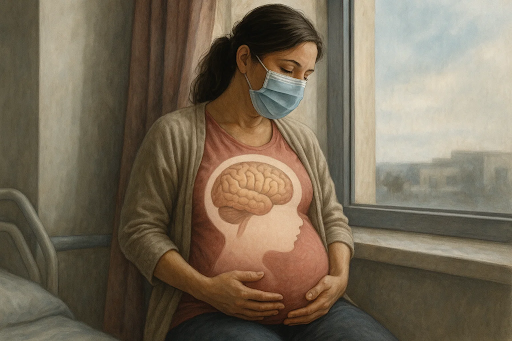
Children may face a greater risk of autism and other developmental disorders if their mothers had COVID-19 during pregnancy, according to new research from Massachusetts General Hospital.
The study, published in Obstetrics and Gynecology, analyzed data from more than 18,000 births in the Mass General Brigham health system between March 2020 and May 2021. Researchers examined confirmed COVID-19 infections in pregnant women and tracked their children’s neurodevelopment through age 3.
They found that over 16% of children born to mothers with COVID-19 were diagnosed with a neurodevelopmental disorder, compared to less than 10% of those whose mothers were uninfected. After adjusting for risk factors, this reflected a 1.3 times higher risk.
>>>Related Hepatitis B Vaccine for Newborns<<<
“The risk is particularly notable among boys and in mothers infected during the third trimester,” said Dr. Lydia Shook, lead author and maternal-fetal medicine specialist at Massachusetts General Hospital. “This is a critical window for brain development.”
The most common diagnoses involved speech, motor delays, and autism. Children exposed to maternal COVID-19 in utero were 2.5 times more likely to be diagnosed with autism (2.7% versus 1.1%).
“These findings highlight that COVID-19, like other infections in pregnancy, may pose risks to fetal brain development,” said Dr. Andrea Edlow, senior author of the study. “They reinforce the importance of preventing infection during pregnancy — especially when vaccine trust is wavering.”
The study period occurred early in the pandemic — before vaccines were widely available — allowing researchers to assess unvaccinated pregnancies with fewer confounding factors. Roughly 93% of the mothers were unvaccinated.
Researchers noted biological plausibility in the results, citing immune responses that can affect fetal brain development even without direct viral transmission.
>>>Check out Early Peanut Introduction Helps Thousands of Babies Avoid Allergies<<<
Insight
Dr. Ryan Sultan, psychiatrist at Columbia University, who was not involved in the study, said the findings add to evidence linking maternal health to long-term child outcomes.
“This reinforces how maternal infections can alter developmental trajectories — something we must take seriously in public health planning.”
Public Health Context
According to the CDC, about 1 in 31 U.S. children was diagnosed with autism by age 8 in 2022, up from 1 in 36 two years prior. The rise has largely been attributed to better screening and awareness, but researchers say environmental and biological factors still play a role.
Federal health agencies, led by HHS Secretary Robert F. Kennedy Jr., have launched a nationwide research effort to investigate the roots of the autism surge.
>>>Check out World Alzheimer’s Day: Progress and Promise in the Quest for a Cure<<<
Takeaway for Expectant Mothers
Experts advise expectant mothers to maintain preventive measures — including vaccination, regular checkups, and avoiding infection exposure — to safeguard both maternal and fetal health.
“Parental awareness of potential risks is key,” said Dr. Shook. “Early evaluation and support can make a significant difference.