
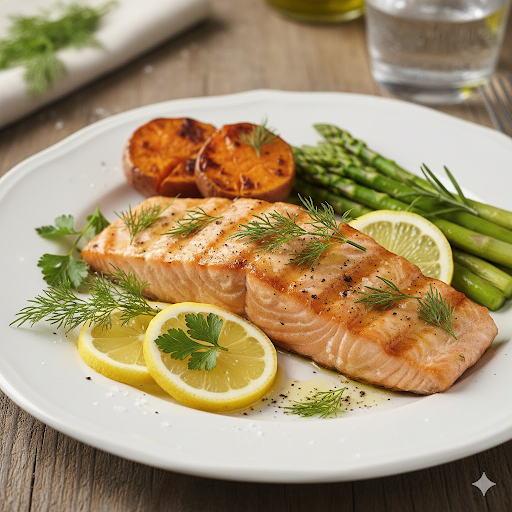
Salmon has long been praised as one of the healthiest sources of protein — and for good reason. Despite its rich, flavorful taste, salmon is not high in cholesterol, and in fact, it may help improve overall heart health when eaten regularly.
According to data from the U.S. Department of Agriculture (USDA), 100 grams of raw farm-raised Atlantic salmon or wild sockeye salmon contains about 60 milligrams (mg) of cholesterol. Cooking methods such as baking, broiling, or grilling don’t significantly alter this amount.
>>>Check out What Are AFRID Safe Foods—and How Can You Add More to Your Menu<<<
How Salmon Supports Heart Health
For years, dietary guidelines advised limiting cholesterol intake to 300 mg per day. However, updated recommendations no longer place strict limits, as research shows that dietary cholesterol has a smaller effect on blood cholesterol levels than once believed.
The American Heart Association (AHA) now recommends eating at least two servings (8 ounces) of fish per week, particularly oily fish like salmon. That’s because salmon is naturally low in saturated fat and high in polyunsaturated fats (PUFAs) — including omega-3 and omega-6 fatty acids.
These healthy fats help reduce low-density lipoprotein (LDL), or “bad” cholesterol, while supporting higher levels of high-density lipoprotein (HDL), or “good” cholesterol. Lower LDL levels are linked to a reduced risk of heart disease and stroke.
>>>Check out Unlocking Brain Health: The Role of the MIND Diet<<<
Choosing the Healthiest Cooking Methods
To maximize salmon’s benefits, experts recommend baking, grilling, broiling, or poaching it instead of frying. Frying or breading adds extra sodium, saturated fat, and trans fats, which can counteract salmon’s heart-protective effects.
Simple Ways to Add Salmon to Your Diet
Incorporating salmon into your weekly meals doesn’t have to be complicated. Try these nutritious, flavorful ideas:
- Coconut-poached salmon with spinach and rice noodles
- Salmon and avocado tacos
- Salmon zucchini skewers with cucumber-dill sauce
- Spicy salmon bowls with jasmine rice
- One-pan roasted salmon and vegetables with quinoa
- Chili-glazed salmon over avocado kale salad
- Coconut sweet potatoes topped with creamy kale and salmon
- Apple-walnut crusted salmon with roasted broccolini
>>>Read more Your Future Health, Forecasted by AI<<<
The Takeaway
Salmon is a heart-healthy protein that can fit easily into most balanced diets. It’s low in cholesterol, packed with omega-3s, and offers a powerful alternative to red meats high in saturated fats.
Regularly including salmon — prepared in healthy ways — can be an easy and delicious step toward supporting long-term cardiovascular health.
For more health news visit news.uloscah.com