
News Desk news.uloscah.com
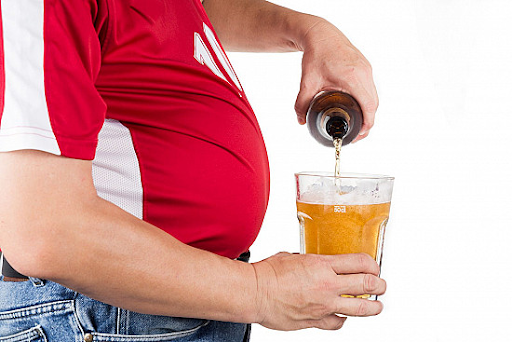
A growing body of evidence suggests that extra belly fat — often called a “beer belly” — may quietly harm the heart long before symptoms appear. A new study from German researchers reveals that abdominal fat poses a greater cardiovascular threat than overall body weight alone.
>>>Popular U.S. Cooking Oil Linked to Obesity<<<
Abdominal Fat: More Dangerous Than BMI Suggests
Scientists at the University Medical Center Hamburg-Eppendorf examined how fat stored deep in the abdomen affects heart structure. Unlike the fat under the skin, this visceral fat sits around internal organs and is known to trigger inflammation and metabolic stress.
To test its impact, researchers analyzed 2,244 adults aged 46 to 78 — none with diagnosed heart disease — using high-resolution cardiac MRI scans. They also evaluated key health metrics including weight, cholesterol, blood pressure, smoking history, and diabetes status.
Instead of relying only on BMI, the team focused on waist-to-hip ratio, a more accurate measure of abdominal fat.
>>>See also Diet Tied to Increasing Cancer Cases<<<
What They Found: Bigger Bellies, Strained Hearts
Men with higher waist-to-hip ratios showed clear signs of early heart damage, even when their overall weight was not very high.
Key findings included:
- Thicker heart muscle walls
- Smaller chamber volume, meaning the heart holds and pumps less blood
- Structural changes that can ultimately lead to heart failure
“Abdominal obesity is associated with more concerning cardiac remodeling patterns than high BMI alone,” said lead study author Dr. Jennifer Erley, radiology resident at UMC Hamburg-Eppendorf.
>>>Mushrooms May Boost Heart and Metabolic Health<<<
Why Belly Fat Hits Men Harder
While women in the study also showed negative heart changes, the effect was much stronger in men. This may be because men naturally store more visceral fat, especially as they age.
Obesity numbers varied sharply depending on measurement:
- Based on BMI: 69% of men and 56% of women were overweight or obese
- Based on waist-to-hip ratio: 91% of men and 64% of women were obese
The data suggests traditional BMI assessments may miss hidden heart risks.
Why It Matters
These findings help explain why:
- Some people with a normal or slightly elevated BMI still develop heart disease
- Others with higher body weight do not
Abdominal fat appears to stress and reshape the heart, making it work harder over time.
>>>The Truth Behind High-Protein Diets: Benefits and Hidden Risks<<<
Study Limitations
Researchers note that:
- The study was observational, so it identifies associations but cannot prove causation
- Participants were not followed long term to see who eventually developed heart disease
- Waist-to-hip ratio, while helpful, doesn’t capture all body composition differences
Still, the evidence strongly supports measuring abdominal fat as part of routine heart-health assessments.