
News Desk news.uloscah.com
High-protein diets are everywhere — from fitness influencers to celebrity trainers — all promising better muscle gains, faster weight loss, and balanced hormones. But according to nutrition experts, the trend may be spiraling into dangerous territory.
Marc O’Meara, senior nutritionist at Brigham and Women’s Hospital, explains that while protein is essential, too much can work against your health, stress your kidneys, and even stall weight loss. Below, he breaks down how much you actually need — and how to avoid overdoing it.
>>>Check out Vitamin D3 Shown to Protect Against Repeat Heart Attacks<<<
Why Are High-Protein Diets So Popular?
Protein plays a major role in:
- Satiety — it’s the macronutrient that tells your brain you’re full.
- Blood sugar stability — O’Meara explains that protein slows the release of sugars into your bloodstream.
- Muscle maintenance and growth — but not at the extreme levels promoted online.
Social media often pushes unrealistic targets like 200g of protein a day — far above what most bodies can process safely.
“You do need protein for building muscle, but social media has taken that and just added lots of extras on top of what the recommendations are,” O’Meara says.
>>>See also What Nutritionists Recommend Eating to Combat Chronic Constipation<<<
The Hidden Risks of Eating Too Much Protein
While protein is healthy, excessive amounts can cause real problems:
Kidney Stress
Your kidneys must process the nitrogen released when protein breaks down. O’Meara says he has seen clients negatively affect their kidney function by following extreme high-protein plans.
Weight Gain Instead of Weight Loss
Protein is calorie-dense — far more per bite than vegetables. Even if it’s “healthy,” overeating it still leads to excess calories stored as fat.
Misleading Food Marketing
Many “high-protein” snacks or bars are ultra-processed, loaded with artificial sweeteners, fillers, or hidden sugars.
>>>Check out Salmon and Cholesterol: What Science Says About Its Heart-Healthy Benefits<<<
So How Much Protein Do You Actually Need?
O’Meara recommends this simple formula:
Protein per day = Body weight (lbs) × 0.36–0.45
Example:
A 110-lb woman needs ~45g of protein per day.
A helpful visual:
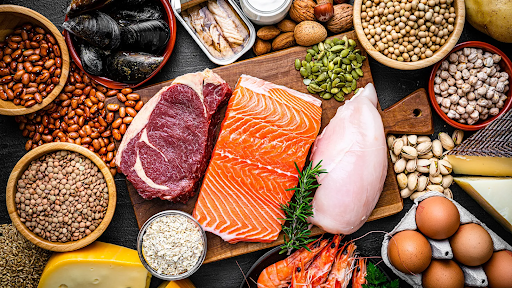
One palm-sized portion of chicken or fish ≈ 20–25g of protein.
Going a little over is fine. Doubling or tripling recommendations is when kidneys “start to fight back,” he warns.
>>>What Are AFRID Safe Foods—and How Can You Add More to Your Menu<<<
Do Athletes or Active People Need More?
Yes — but not as much as most think.
Athletes should aim for about 50% more than the baseline formula.
For the same 110-lb woman, that’s an extra 20–25g per day.
Pregnant, Breastfeeding, or Over Age 65? Your Needs Increase
- Pregnant or breastfeeding women: ~1.25× baseline
- Older adults (65+): also ~1.25×, because protein helps preserve muscle and prevent falls
- Twin pregnancies often require around 100g per day total
>>>Can Collagen Supplements Reduce Wrinkles and Fine Lines<<<
Plant vs. Animal Protein: Which Is Better?
Research from the Nurses’ Health Study found that plant-based proteins (beans, nuts, seeds, whole grains, dairy) were associated with a lower risk of chronic disease.
Plant proteins:
- Offer fiber, vitamins, and phytonutrients
- Are often gentler on the kidneys
- Can meet your protein needs with planning
Animal proteins aren’t “bad,” but balance matters.
What About Protein Bars, Shakes, and Snacks?
Some are helpful. Many are not.
O’Meara warns that:
- Some protein bars contain four different artificial sweeteners
- “Keto” labels are often misleading
- Highly processed “protein foods” can undermine health goals
Look for bars or shakes with:
- Real ingredients
- A balance of carbs and protein
- No heavy metals (especially important in pregnancy)
Tips for Eating Protein the Right Way
Include protein every time you eat
A small serving at each meal and snack helps stabilize energy and blood sugar.
Eat in the right order
- Vegetables or salad first
- Protein second
- Carbs/sugars last
This helps control blood sugar and prevents overeating.
Save dessert for the end of a meal
Protein slows sugar absorption — but only if you eat it before dessert.
Strength train
Protein alone doesn’t build muscle. You need resistance training at least 2–3 times a week.