
New class of medications shows unprecedented results in clinical testing, potentially transforming obesity treatment
The weight loss medication landscape is experiencing a dramatic shift with the emergence of so-called “GLP-3” drugs—powerful triple-action treatments that are producing remarkable results in clinical trials. While not yet approved by regulators, these medications are generating significant buzz in medical circles for their ability to help people shed substantial amounts of weight.
What Exactly Are GLP-3 Drugs?
Despite the name, “GLP-3” isn’t actually a human hormone—the term has become an internet shorthand for a new category of triple-agonist medications. These drugs work differently from popular weight loss medications like Ozempic or Wegovy by targeting three distinct hormone receptors simultaneously rather than just one or two.
The leading candidate in this category is retatrutide, manufactured by Eli Lilly. This experimental medication activates three separate pathways in the body: GLP-1 (glucagon-like peptide-1), GIP (glucose-dependent insulinotropic polypeptide), and glucagon receptors.
How the Triple-Action Mechanism Works
Each of the three targeted hormones plays a distinct role in weight management:
GLP-1 activation slows how quickly your stomach empties after eating, helping you feel satisfied longer while also improving blood sugar regulation and reducing appetite signals in the brain.
GIP stimulation works alongside GLP-1 to enhance insulin release following meals while also influencing appetite control and reducing stomach acid production, which contributes to prolonged fullness.
Glucagon action provides the metabolic boost that sets these drugs apart from earlier treatments. This hormone speeds up metabolism and helps the body break down fat cells for energy, potentially accelerating weight loss beyond what GLP-1 alone can achieve.
>>>Check out Can Collagen Supplements Reduce Wrinkles and Fine Lines<<<
The Clinical Trial Results Are Striking
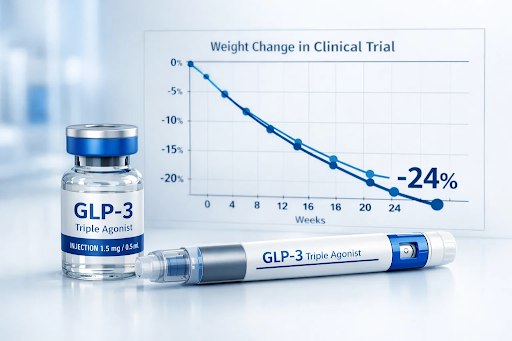
The numbers from retatrutide trials have captured medical attention. In a 48-week phase 2 study, the highest dose produced approximately 24% average weight loss, with participants continuing to lose weight even at the study’s conclusion—suggesting the full potential might be even greater.
More recently, participants with obesity and knee arthritis taking a 12-mg dose saw an average weight loss of 71.8 pounds (28.7%) at 68 weeks. These results approach outcomes typically seen only with bariatric surgery, making retatrutide potentially the most effective pharmaceutical weight loss option tested to date.
Beyond weight reduction, trial participants experienced improvements in multiple health markers including blood pressure, cholesterol levels, and cardiovascular risk factors. Many individuals with prediabetes saw their condition reverse during treatment.
Not Without Side Effects
The most common adverse reactions mirror those seen with existing GLP-1 medications: nausea, vomiting, diarrhea, and constipation. These gastrointestinal issues typically occur when starting treatment or increasing doses, and often diminish over time.
Heart rate increases have been observed in trials, dose-dependent in nature and similar to patterns seen with other medications in this drug class. Some participants reported altered skin sensations, though these were generally mild and didn’t lead to treatment discontinuation.
Medical experts emphasize that the glucagon component introduces less-studied long-term safety considerations compared to GLP-1-only medications. Close medical supervision is essential, particularly during initial treatment phases.
>>>See Why GLP-1 Weight-Loss Drugs Can Cause Hair Loss<<<
When Might It Become Available?
Retatrutide remains investigational—not yet approved for use outside clinical trials. Seven additional phase 3 trials are expected to conclude throughout 2026, with potential FDA review projected around 2027 according to pharmaceutical industry analysts.
This timeline hasn’t stopped some individuals from seeking the medication through questionable channels. Reports indicate a growing gray market for retatrutide, with overseas suppliers exploiting regulatory loopholes to sell unverified versions. Medical professionals strongly caution against using non-approved sources, citing contamination risks, unknown formulations, and absence of medical oversight.
Beyond Weight Loss
Researchers are investigating retatrutide for multiple conditions beyond obesity, including type 2 diabetes, kidney disease, cardiovascular risk reduction, obstructive sleep apnea, chronic back pain, and metabolic liver disease. The medication’s multi-pathway action may provide benefits across various metabolic conditions.
Trial data shows the drug doesn’t just reduce weight—it appears to fundamentally alter metabolic function, potentially addressing root causes of obesity rather than merely suppressing symptoms.
>>>Check out Weight-Loss Drugs Like Ozempic Linked to Mental Health Risks<<<
What This Means for Patients
If approved, retatrutide would represent the first medication in a new therapeutic class, offering options for individuals who haven’t responded adequately to existing treatments or need more substantial weight reduction for health reasons.
However, these aren’t miracle solutions requiring no effort. All clinical trials combined the medication with dietary modifications and physical activity. Maintaining weight loss after stopping treatment requires addressing underlying lifestyle factors and metabolic conditions.
The medication’s eventual cost remains uncertain, though similar weight loss drugs currently command premium prices, often exceeding several hundred dollars monthly without insurance coverage.
>>>Check out Obesity and overweight<<<
The Bottom Line
GLP-3 drugs like retatrutide represent a significant advancement in pharmaceutical obesity treatment, with clinical results that rival surgical interventions. The triple-action approach addresses weight loss through complementary biological pathways, producing outcomes that surpass earlier medication generations.
Yet questions remain about long-term safety, optimal patient selection, maintenance strategies, and accessibility. As additional trial data emerges over the coming years, the medical community will gain clearer understanding of how these powerful medications fit into comprehensive weight management strategies.
For now, individuals interested in these treatments should discuss options with healthcare providers while awaiting regulatory approval and additional safety data. The revolution in weight loss medication continues evolving rapidly, offering hope to millions struggling with obesity—but patience and medical guidance remain essential as this new chapter unfolds.
News Desk news.uloscah.com