
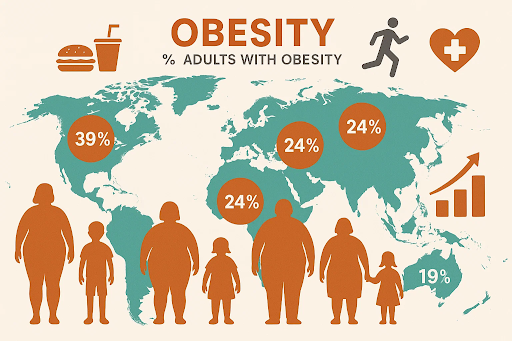
Key Facts (WHO, 2022–2025)
- Global adult obesity has more than doubled since 1990; adolescent obesity has quadrupled.
- 2.5 billion adults were overweight in 2022 — 890 million of them living with obesity.
- 43% of adults (18+) were overweight; 16% were obese.
- 1 in 8 people worldwide lived with obesity in 2022.
- Over 390 million children and adolescents (5–19 years) were overweight in 2022, including 160 million with obesity.
- In 2024, 35 million children under 5 were overweight.
Overview
Overweight describes excessive fat accumulation, while obesity is recognized by WHO as a chronic, relapsing disease influenced by genetics, neurobiology, dietary patterns, lifestyle, socioeconomic factors, and globalized food systems.
As nations develop economically, diets shift toward energy-dense, ultra-processed foods, physical activity decreases, and environments become increasingly “obesogenic.” This has fueled a rapid rise in global obesity, now affecting over 1 billion people across nearly every country.
Diagnosis is typically based on Body Mass Index (BMI) and supported by measures like waist circumference.
>>>Check out Weight-Loss Drugs Like Ozempic Linked to Mental Health Risks<<<
How WHO Defines Overweight & Obesity
Adults
- Overweight: BMI ≥ 25
- Obesity: BMI ≥ 30
Children 5–19 years
- Overweight: BMI-for-age > +1 SD
- Obesity: BMI-for-age > +2 SD
Children Under 5
- Overweight: Weight-for-height > +2 SD
- Obesity: Weight-for-height > +3 SD
>>>See also Abdominal Fat Linked to Early Heart Damage<<<
Global Prevalence: A Rapidly Growing Crisis
Adults
- 2.5 billion adults overweight in 2022 (43% worldwide).
- 890 million adults are living with obesity.
- Prevalence doubled from 1990 to 2022.
- Highest rates seen in the Americas (67%) and lowest in South-East Asia & Africa (31%).
Children Under 5
- 35 million overweight (2024)
- Rapid increases seen especially in Africa (+12% since 2000).
- Almost half live in Asia.
Children & Adolescents (5–19 years)
- 390 million overweight (2022)
- Rates soared from 8% (1990) to 20% (2022).
- Obesity increased from 2% to 8% over the same period.
>>>New WHO Global Infertility Guidelines Aim to Improve Access to Care<<<
What’s Driving the Obesity Epidemic?
Obesity is caused by a mix of biological, environmental, and behavioral factors, including:
Environmental/Societal Drivers
- Ultra-processed, affordable, high-fat, high-sugar foods
- Limited access to safe spaces for physical activity
- Weak regulatory environments
- Aggressive food marketing
- Poor early nutrition
- Urbanization and sedentary lifestyles
Individual-Level Contributors
- Genetics and family history
- Medications
- Underlying diseases
- Psychological factors
- Disrupted sleep, stress, poor dietary habits
Health Consequences
High BMI contributed to 3.7 million deaths from noncommunicable diseases (NCDs) in 2021, including:
- Heart disease
- Stroke
- Type 2 diabetes
- Cancers
- Neurological disorders
- Respiratory diseases
- Digestive disorders
Children with obesity face greater risks of:
- Early-onset diabetes
- Hypertension
- Cardiovascular disease
- Psychological challenges
- Lower quality of life
- Bullying and stigma
Obesity in childhood often leads to obesity in adulthood.
Economic Impact
If trends continue:
- Global obesity-related costs will hit US$ 3 trillion/year by 2030,
- And US$ 18 trillion/year by 2060.
The Double Burden of Malnutrition
Low- and middle-income countries now face a dual crisis:
- Undernutrition (stunting, wasting, micronutrient deficiencies)
- Rising obesity rates fueled by cheap, nutrient-poor foods
Many households today have both undernourished and overweight members — a sign of deep food system inequality.
>>>Why GLP-1 Weight-Loss Drugs Can Cause Hair Loss<<<
Prevention & Management
Individual-Level Actions
- Healthy pregnancy weight gain
- Exclusive breastfeeding (first 6 months)
- Limit sugary drinks and ultra-processed foods
- Reduce screen time
- Encourage active play and regular exercise
- Prioritize fruits, vegetables, whole grains, nuts, legumes
- Avoid alcohol/tobacco
- Get adequate sleep
- Regular physical activity
Healthcare System Responsibilities
- Screen for BMI and growth issues
- Provide lifestyle counseling
- Diagnose and manage obesity early
- Monitor for NCD risk factors
- Offer treatment options, including medication and surgery
>>>Check out NHS Warns of Long-Term Omeprazole Risks<<<
Societal & Policy-Level Solutions
Obesity is not just an individual issue — it’s shaped by environments and systems.
Effective actions include:
- Reformulating foods (reduce salt, sugar, fats)
- Restricting junk-food marketing, especially to children
- Creating healthier food environments
- Making nutritious foods affordable
- Urban planning that promotes physical activity
- Strong primary health care and chronic care models
Food industry role:
- Offer healthier, affordable foods
- Reduce unhealthy ingredients
- Support healthy workplace initiatives
>>>Check out New Diabetes Type Needs Specialized Treatment<<<
WHO’s Global Response
WHO has launched multiple initiatives, including:
- Global Nutrition Targets (extended to 2030)
- NCD Targets to halt obesity rise
- WHO Acceleration Plan to Stop Obesity (2022)
- 2025 GLP-1 Obesity Treatment Guidelines for safer, standardized use of medications like semaglutide
These efforts aim to build systems that recognize obesity as a complex, lifelong condition, not a personal failure.