
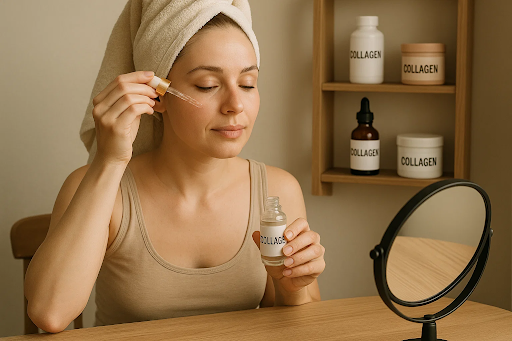
Collagen is everywhere — in powders, gels, creams, and even cocktail shots at wellness parties. Marketed as the ultimate anti-aging solution, it promises plumper skin, stronger joints, and healthier hair. But does it really work, or are we buying into clever marketing?
What Is Collagen?
Collagen is the most abundant protein in the human body, forming the scaffolding that keeps skin firm, joints mobile, bones resilient, and nails and hair healthy.
But supply isn’t endless. From our mid-20s, we naturally lose about 1% of collagen per year, with lifestyle factors such as sun exposure, diet, and stress accelerating the decline. That’s when the beauty and wellness industry steps in with supplements, drinks, and creams — promising to “bank” collagen before aging takes its toll.
Read our feature: World Alzheimer’s Day – Progress in Finding a Cure<<<
The Consumer Experience: “It Changed My Skin”
For 33-year-old mother Kimberlie Smith, collagen felt like a lifeline. After a stressful year that left her exhausted and her skin depleted, she began taking marine collagen daily.
“My skin is brighter, my hair’s thicker, and my nails stronger,” she says. “As a sleep-deprived mom, I’ve definitely noticed a difference.”
Weightlifter and neuroanaesthetist Ali Watson, 46, also swears by collagen — not just for herself, but even for her aging dog, Tommy. “I started for joint protection, but I feel my skin glows more. With Tommy, I hoped it would ease his stiffness,” she admits, though she remains unsure how much is placebo.
Expert View: The Science Doesn’t Match the Hype
Dermatologists caution against expecting miracles. Collagen is a large molecule, meaning most of it is broken down in the gut before reaching the skin. Manufacturers have turned to collagen peptides (hydrolyzed collagen) to improve absorption, but results remain inconsistent.
Dr. Emma Wedgeworth, a consultant dermatologist, is skeptical:
“Collagen peptides may enter the bloodstream, but whether they reach the skin in meaningful amounts is uncertain.”
Topical creams? Even less effective. Applied collagen molecules sit on the surface but can’t penetrate to the deeper dermis layer where real change occurs.
Explore How to Get a Nursing License in Alabama<<<
Which Type Works Best?
There are three main types of supplements:
- Marine collagen (from fish): Rich in Type I collagen, linked to skin and bone health.
- Bovine collagen (from cows): Often marketed for joint support.
- Vegan alternatives: Not true collagen, but blends of amino acids and vitamins that may support natural collagen production.
Dermatologists generally recommend marine collagen if taken orally.
The Research Gap: Conflicting Evidence
Industry-funded studies often show dramatic benefits — from fewer wrinkles to improved elasticity. But independent research paints a murkier picture, suggesting little to no effect.
Professor Faisal Ali of Mid Cheshire NHS Trust warns:
“There’s simply not enough robust evidence to say oral or topical collagen has a substantial impact.”
Beyond Supplements: Proven Ways to Protect Collagen
Experts agree that lifestyle remains the best defense against collagen loss:
- Daily sunscreen to block UV damage.
- Balanced diet rich in antioxidants.
- Avoiding smoking, which accelerates collagen breakdown.
For those willing to invest, treatments like microneedling and laser therapy can trigger new collagen production — though each session can cost up to £300.
“Smoking, Vaping, and Nicotine Pouches May Raise Type 2 Diabetes Risk”
Bottom Line
Collagen may offer modest benefits for some, but science has yet to prove it’s the miracle solution the wellness industry claims. What’s certain is that simple habits — sun protection, healthy eating, and stress management — will do far more to preserve youthful skin than a pricey tub of powder.