
Lifestyle choices are known to play a major role in the development of type 2 diabetes. Factors such as poor diet, lack of exercise, obesity, insufficient sleep, heavy alcohol use, and smoking all contribute to risk.
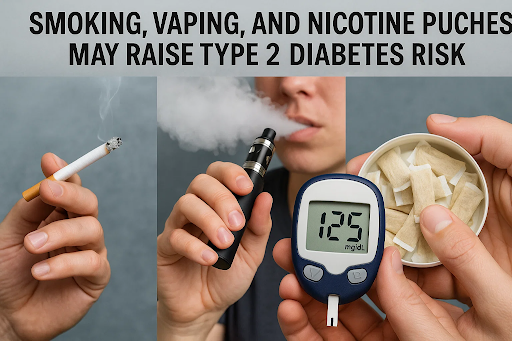
A recent study presented at the European Association for the Study of Diabetes (EASD) annual meeting reinforces smoking as a major driver of type 2 diabetes. Importantly, the researchers found that the increased risk applies across all four recognized subtypes of the condition. They also discovered that smokeless tobacco and nicotine-based alternatives, like e-cigarettes and pouches, may carry similar risks.
Currently, around 11% of the global population has diabetes, and nearly 90% of those cases are type 2 diabetes.
>>>Check out Your Future Health, Forecasted by AI<<<
Understanding the Subtypes of Type 2 Diabetes
To dig deeper, scientists reviewed data from more than 3,300 individuals with type 2 diabetes and nearly 3,900 without the disease, drawing from previous studies in Norway and Sweden. They categorized participants into four subgroups:
- Mild age-related diabetes (MARD)
- Mild obesity-related diabetes (MOD)
- Severe insulin-deficient diabetes (SIDD)
- Severe insulin-resistant diabetes (SIRD)
They also examined smoking history, whether participants were current smokers, former smokers, or never-smokers.
Lead researcher Emmy Keysendal, a PhD student at Karolinska Institutet in Sweden, explained that the goal was to see whether smoking impacted some subtypes more than others. Since each group has different biological mechanisms, understanding this relationship could guide prevention strategies.
Smoking Raises Risk Across All Subtypes
The study concluded that anyone with a history of smoking—whether past or present—had a higher likelihood of developing type 2 diabetes compared to non-smokers.
Breaking down the results, researchers found:
- Smokers doubled their risk of SIRD.
- Risk increased by 20% for SIDD, 27% for MARD, and 29% for MOD.
Heavy, long-term smokers faced even higher risks. For example, people who smoked around 20 cigarettes a day for 15 years were more than twice as likely to develop SIRD and faced up to a 57% higher risk for the other subtypes.
Smokeless and “Smoke-Free” Nicotine Products Also Pose Risks
The study also looked at snus (a smokeless tobacco product popular in Scandinavia) and found it raised diabetes risk as well:
- 19% higher risk for SIDD
- 13% higher risk for SIRD
While snus doesn’t involve combustion and typically has fewer harmful chemicals than cigarettes, it delivers similar levels of nicotine. This suggests nicotine itself may drive some of the risk, likely through its effect on insulin resistance.
That connection is particularly concerning as nicotine pouches and e-cigarettes—often marketed as safer, tobacco-free alternatives—grow in popularity.
>>>See also Unlocking Brain Health: The Role of the MIND Diet<<<
Debunking Myths About Smoking and Diabetes
Some people believe smoking might lower diabetes risk by curbing appetite and weight gain. However, the findings strongly dispute this notion.
Dr. David Cutler, a family medicine physician at Providence Saint John’s Health Center in California, emphasized that smoking does not protect against diabetes. Instead, it adds another layer of risk on top of other lifestyle factors like diet, exercise, and weight control.
“This study helps dismantle the myth that smoking somehow prevents diabetes,” Dr. Cutler noted. “The evidence clearly shows the opposite.”
Why This Matters
The research underscores the importance of avoiding both traditional and “alternative” nicotine products for diabetes prevention. While further studies are needed—especially on how risk factors interact with genetics—the evidence strongly supports quitting nicotine in all forms.
In the meantime, focusing on well-established prevention strategies such as healthy eating, regular physical activity, maintaining a healthy weight, and limiting alcohol use remains key to lowering diabetes risk.