
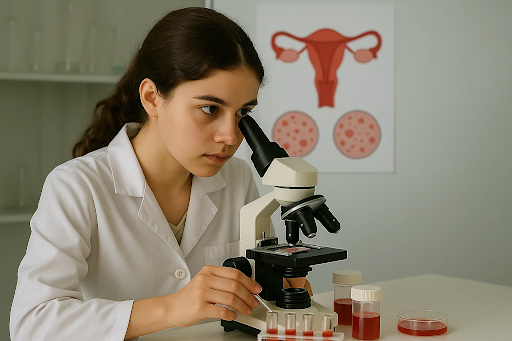
Despite its prevalence, endometriosis remains widely underdiagnosed and poorly understood. Researchers are now investigating how environmental factors, such as exposure to microplastics, might contribute to its development.
>>>Related Noncommunicable diseases<<<
Exploring a New Connection: Microplastics and Reproductive Health
Recent studies have begun exploring a possible link between endometriosis and microplastic exposure. These findings suggest that plastic particles accumulating in the human body may influence reproductive health. As plastic waste continues to pollute the environment, scientists are increasingly concerned about its impact on fertility and hormonal function.
>>>Check out What Are AFRID Safe Foods—and How Can You Add More to Your Menu<<<
Breakthrough Research: Using Menstrual Blood for Diagnosis
Julia Froese, a senior environmental health sciences student at UNC-Chapel Hill’s Gillings School of Global Public Health, presented award-winning research on using menstrual blood as a diagnostic tool for endometriosis. Her goal: create a noninvasive alternative to laparoscopic surgery, which is currently the only definitive way to diagnose the disease.
“The study is looking to create a diagnostic test that’s noninvasive, using menstrual blood to actually diagnose endometriosis,” Froese explained. “So more people can get diagnosed earlier, before they face fertility issues that could’ve been addressed sooner.”
>>>Check out Switching Soda for Water Could Help Cut Your Liver Disease Risk<<<
What Scientists Are Finding About Micro- and Nanoplastics
Dr. Christine Metz, a professor at Northwell Health’s Feinstein Institutes for Medical Research, co-directs the Research OutSmarts Endometriosis Study. She and her team are examining how micro- and nanoplastics affect uterine health.
“The smaller plastic particles seem to have more significant effects, and they’re not typically assessed or measured,” Metz said. Her team found early evidence that nanoplastics may disrupt endometrial cell function—potentially contributing to infertility and uterine disorders.
Plastic in the Body: What the Evidence Shows
Plastic pollution doesn’t just harm oceans—it may also enter our bodies through food, water, and air. Studies have found traces of microplastics in human blood, lungs, and even placental tissue.
A 2022 study detected environmental toxins, including plastic particles, in menstrual blood samples, confirming that these contaminants can reach reproductive organs. Other research links microplastic exposure to inflammatory bowel disease, hormonal disruption, and even neurological conditions.
>>>Check out Salmon and Cholesterol: What Science Says About Its Heart-Healthy Benefits<<<
Practical Steps: How to Reduce Everyday Plastic Exposure
Experts recommend several simple changes to reduce exposure:
- Cut down on single-use plastics like bottles, bags, and packaging.
- Avoid plastic utensils and straws—use bamboo or stainless steel instead.
- Switch to safer containers: opt for glass or stainless steel food storage.
- Use eco-friendly cleaning and laundry products.
- Choose natural fibers like cotton or linen over synthetic fabrics.
(Information source: PlasticFreeWNC)
The Bigger Picture: Pollution, Policy, and Women’s Health
Environmental health researchers emphasize that addressing plastic pollution isn’t just about cleaning up the planet—it’s also about protecting human health, especially reproductive health.
“The endometrial lining is shed every month,” Metz said. “We can use it to understand how environmental contaminants affect women’s health.”
As scientists continue studying how micro- and nanoplastics interact with human tissues, public health experts are calling for stronger regulations on plastic use, improved waste management, and broader awareness of the hidden health effects of pollution.
NEWSDESK news.uloscah.com