
Nation losing momentum in cardiovascular health battle as preventable risk factors surge
Heart-related illnesses continue claiming more American lives than any other cause, and alarming new findings indicate the situation is deteriorating rather than improving.
A landmark statistical analysis released in the Journal of the American College of Cardiology reveals troubling trends: efforts to control blood pressure and cholesterol levels have plateaued over the past fifteen years, even as obesity and diabetes rates accelerate upward.
The research demonstrates a concerning paradox—despite increasingly sophisticated medical treatments and technologies, the underlying conditions that trigger cardiovascular problems are spreading more widely throughout the population.
>>>Abdominal Fat Linked to Early Heart Damage<<<
The Five Deadliest Heart Conditions
Coronary Artery Disease
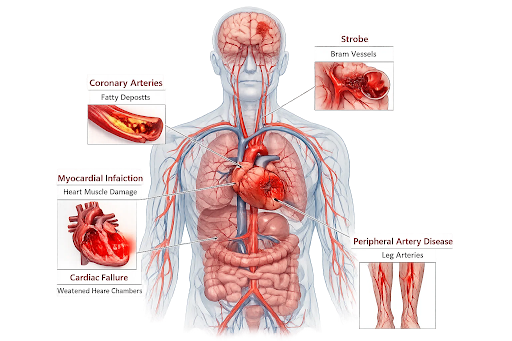
This condition tops the list as the most widespread cardiac ailment and deadliest cardiovascular threat facing Americans. The disease develops when fatty deposits accumulate inside coronary arteries, limiting blood circulation to heart muscle.
Current estimates indicate more than 20.5 million American adults now live with this condition, representing an increase since 2019. A particularly troubling finding: merely half of diagnosed patients receive appropriate medical management, leaving countless individuals at heightened risk for serious complications that could be avoided.
>>>Check out Bad Gums Linked to Brain and Stroke Risks<<<
Myocardial Infarction
Commonly called a heart attack, this emergency occurs when blockages—often blood clots—cut off circulation to portions of heart tissue.
Recent patterns show a demographic shift in victims. While overall hospital admissions for cardiac events have dropped over recent decades, younger age groups are experiencing rising rates. This pattern suggests cardiovascular damage is beginning at earlier life stages than historically observed, likely reflecting deteriorating metabolic wellness among younger generations.
Cardiac Failure
Contrary to popular belief, this diagnosis doesn’t indicate the heart has ceased functioning—rather, the organ has become too compromised to circulate blood adequately throughout the body. It represents a long-term, advancing condition typically resulting from other issues including elevated blood pressure or prior cardiac events.
Approximately 6.7 million Americans currently manage this chronic condition. Following a period of declining mortality between 1999 and 2011, death rates have unfortunately reversed direction and are climbing once more.
Peripheral Vascular Disease
This condition involves arterial narrowing throughout the body’s extremities and organs—legs, abdomen, arms, and head—with lower limbs most frequently affected. Reduced circulation causes painful symptoms and functional limitations.
Roughly one in fourteen adults experiences this disease, though medical experts suspect actual numbers are substantially higher due to widespread underdiagnosis. Conservative estimates place total cases above 12 million Americans.
Poor disease management carries devastating consequences: approximately one in ten patients with the most severe form eventually require major limb amputation.
Cerebrovascular Accident
Better known as stroke, this medical emergency happens when blood delivery to brain tissue is disrupted or diminished, starving cells of essential oxygen and nutrients. It ranks among the primary causes of permanent disability and mortality.
Currently the fifth-leading mortality cause nationwide, strokes accounted for nearly five percent of all deaths during 2023. Disease prevalence has edged slightly upward to 2.9% in recent years. While treatment quality has advanced, total case numbers continue growing as the population ages and underlying risk factors remain poorly controlled.
>>>Check out These 5 Everyday Foods May Help Protect Your Heart<<<
Five Critical Risk Factors
The cardiology report emphasizes these conditions don’t strike randomly—they stem from identifiable risk factors that are largely preventable or controllable through intervention:
Elevated Blood Pressure: Nearly half of all adults experience hypertension. Despite established clinical guidelines, management success rates have remained flat for fifteen years, while hypertension-related deaths have approximately doubled over the past twenty years.
Blood Sugar Disorders: Diabetes prevalence is climbing steeply, particularly among younger demographics. Only half of diabetic patients maintain appropriate glucose control, directly accelerating cardiovascular deterioration.
Excess Body Weight: Obesity has reached crisis proportions, now affecting over 40% of the adult population. This condition amplifies every other cardiovascular risk factor.
Harmful Cholesterol: Controlling LDL cholesterol remains essential, yet fewer than 25% of high-risk individuals achieve recommended target levels.
Tobacco Use: Traditional cigarette consumption has declined overall but persists at elevated rates in economically disadvantaged communities. Meanwhile, electronic cigarette adoption among youth creates an emerging and evolving cardiovascular threat.
>>>Check out Obesity and overweight<<<
The Path Forward
This comprehensive analysis makes clear that reversing America’s cardiovascular health decline requires addressing these modifiable risk factors through improved preventive care, broader access to treatment, and public health initiatives targeting the root causes of metabolic disease.
The tools to combat these conditions exist—what’s missing is the widespread implementation and consistent management needed to translate medical knowledge into population-level health improvements.
News Desk news.uloscah.com