
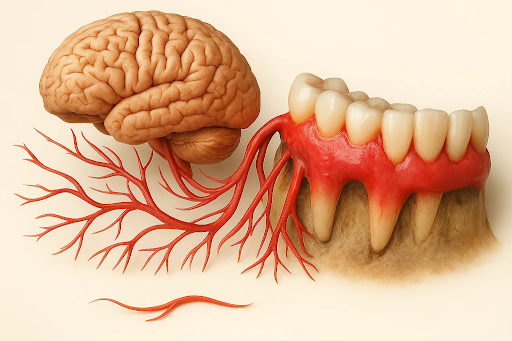
New evidence suggests that gum disease may do more than harm your smile — it could silently affect your brain and raise your risk of stroke.
In findings published in Neurology Open Access, researchers from the University of South Carolina analyzed data from the long-running Atherosclerosis Risk in Communities (ARIC) study. They found that periodontal disease was linked to significant white matter damage — a key indicator of brain aging and small vessel disease.
>>>Check out Smoking, Vaping, and Nicotine Pouches May Raise Type 2 Diabetes Risk<<<
Participants with gum disease were 56% more likely to fall into the highest quartile for white matter hyperintensity volume, a brain imaging marker tied to cognitive decline, dementia, and stroke.
“These results highlight oral health as a crucial part of brain disease prevention,” said Dr. Souvik Sen, MD, MS, MPH, the study’s lead author. “Inflammation from dental disease may accelerate vascular changes in the brain.”
In a parallel 21-year follow-up of nearly 6,000 participants, poor oral health also doubled the risk of ischemic stroke. Individuals with both periodontal disease and dental caries faced a 10% stroke incidence, compared with 4.1% among those with healthy gums.
>>>Check out Soft Drinks Could Trigger Depression by Disrupting Gut Bacteria<<<
The researchers found that participants who received regular dental care had significantly lower odds of developing gum disease, reinforcing the role of preventive dentistry in long-term neurological health.
Dr. Leonardo Pantoni, a neurologist at the University of Milan, noted in an accompanying editorial that white matter hyperintensities are far from harmless.
“They’re strongly associated with dementia, stroke, and mortality,” Pantoni said. “Neurologists should begin to see oral health as a modifiable risk factor for cerebrovascular disease.”
White matter hyperintensities (WMH) reflect chronic small vessel injury in the brain — a condition often linked to aging, hypertension, and now, poor dental hygiene.
>>>Check out Breakthrough Drug Combo Extends Life Expectancy in Prostate Cancer<<<
While the study’s findings do not yet establish a direct cause-and-effect relationship, they open an important avenue for future prevention strategies. Researchers say targeting oral inflammation could become a new way to reduce cerebral small vessel disease risk.
“If further studies confirm this link, oral care could be a powerful tool in protecting brain health,” Dr. Sen added.
The ongoing ARIC study, which began in 1987, continues to shed light on how systemic health and lifestyle factors — including dental hygiene — shape brain aging and stroke outcomes.
NEWS DESK news.uloscah.com