
News Desk news.uloscah.com
How you position your body at night may contribute to more than just stiffness. Experts warn that your sleep posture can influence nerve health, digestion, joint pain and sleep quality.
Comfort Isn’t Always Healthy, Experts Say
“Comfort is often what drives our preferred sleep position,” said Shelby Harris, clinical psychologist and behavioral sleep specialist. “But that same position can also make us uncomfortable in the morning.”Sleeping in awkward positions keeps the body still for long periods, placing stress on nerves, muscles and ligaments.
>>>Coffee May Protect Against Atrial Fibrillation<<<
Curled or Tucked Positions Can Compress Nerves
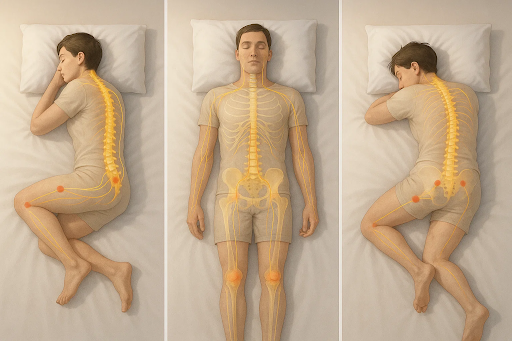
Despite assumptions, curled-up postures aren’t typically linked to emotional stress. However, bent or tucked limbs — sometimes called the “T. rex position” — can compress nerves. A 2023 review of cubital tunnel syndrome found that sleeping with elbows sharply bent increases nerve pressure, causing numbness, tingling or shooting pain.
Back Sleeping Isn’t Always Best
While lying on your back keeps arms free, experts note it can worsen snoring and acid reflux.
The Sleep Foundation reports that back sleeping can cause the tongue to fall backward and irritate digestive symptoms.
Stomach Sleeping Comes With Its Own Risks
Sleeping face-down is the least common position — and for good reason. The Sleep Foundation notes that this posture twists the spine and strains the neck, shoulders and lower back. However, it may reduce snoring for some people.
>>>Check out Soft Drinks Could Trigger Depression by Disrupting Gut Bacteria<<<
Side Sleeping: The Most Recommended Position
Research cited by Harvard Health and Mayo Clinic shows side sleeping naturally aligns the spine when paired with slightly bent knees and a pillow between them. This reduces pressure on the back, pelvis and hips.
Your Sleep Position Matters More as You Age
Johns Hopkins Medicine highlights that proper sleep posture becomes increasingly important with age or chronic health issues. Many experts advise gradually transitioning to back or side sleeping and using thinner pillows to improve alignment.
>>>Bright Night Lights May Increase Stroke and Heart Failure Risk<<<
When to Seek Professional Help
If discomfort persists or sleep remains unrefreshing despite adjusting your position, Harris recommends consulting a sleep specialist for tailored solutions.