
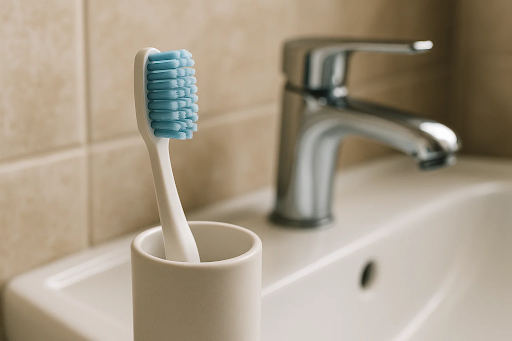
You use it twice a day to clean your mouth — but your toothbrush might be one of the dirtiest things you own. According to microbiologists, the average toothbrush can host anywhere between 1 to 12 million bacteria and fungi, along with traces of viruses. That’s because each brushing session introduces saliva, water, and food particles, creating the perfect breeding ground for microbes.
Even before you use a new brush, it’s not completely sterile. A study in Brazil found that half of new toothbrushes were already contaminated with bacteria straight from the packaging.
>>>Check out Health Minister Praises New HIV Jab Amid Supply Limits<<<
Where the Germs Come From
The bacteria on your toothbrush primarily come from three sources — your mouth, your skin, and your environment.
- Your mouth naturally contains microbes like Streptococcus and Actinomyces, which are mostly harmless.
- However, environmental exposure — especially in bathrooms — adds less friendly species like E. coli or Pseudomonas, both linked to infections.
- And yes, your toilet could be partly to blame.
>>>Check out Can Collagen Supplements Reduce Wrinkles and Fine Lines<<<
The Toilet Plume Problem
Each toilet flush can send microscopic droplets — called toilet plumes — as far as five feet into the air. These droplets can contain bacteria and viruses, including those that cause flu, COVID-19, and stomach infections.
If your toothbrush is stored near the toilet without a cover or protection, it may be getting an unwanted daily “spray.”
Pro tip: Always close the toilet lid before flushing and store your toothbrush at least a few feet away.
Should You Worry?
The good news: most of the bacteria found on toothbrushes are harmless to healthy individuals.
However, for people with weakened immune systems, the risks are higher. Some toothbrush bacteria have been found to carry antibiotic-resistant genes, making infections harder to treat if they do occur.
Additionally, viruses like herpes simplex (cold sores) and coronaviruses can survive on toothbrush bristles for hours — or even up to two days.
That’s why experts recommend never sharing toothbrushes and avoiding contact between brushes in shared holders.
>>>See also What Nutritionists Recommend Eating to Combat Chronic Constipation<<<
How to Keep Your Toothbrush Clean
Keeping your toothbrush hygienic doesn’t require fancy gadgets. Here are simple, science-backed steps:
- Rinse thoroughly after each use to remove debris.
- Air dry upright — moisture helps bacteria thrive.
- Don’t store it in closed containers, which trap humidity.
- Disinfect weekly by soaking the bristles in antiseptic mouthwash for 5–10 minutes.
- Replace every three months, or sooner if bristles are frayed.
Some dentists also suggest soaking in a 1% vinegar solution to reduce bacteria — though the taste may linger.
Do Antimicrobial Brushes Work?
Some toothbrushes claim to kill bacteria using antimicrobial coatings, but research shows limited effectiveness. In fact, these coatings may encourage more resistant bacterial strains.
Instead, the best defense remains routine replacement and proper drying.
The Future of Toothbrush Technology
Interestingly, researchers are now exploring probiotic toothbrushes — designed to promote “good bacteria” that protect against cavities and gum disease. Strains like Streptococcus salivarius and Limosilactobacillus reuteri show promise in keeping oral microbes balanced.
“Probiotic bristles might one day turn toothbrushes from bacteria carriers into protectors,” says microbiologist Marc-Kevin Zinn from Rhine-Waal University.
>>>See also Nursing Licensure By State<<<
The Bottom Line
Your toothbrush doesn’t have to be spotless, but it shouldn’t be a science experiment either.
Keep it dry, keep it separate, and don’t let it linger too close to the toilet. And when in doubt — replace it.
A fresh brush every three months could be one of the simplest ways to protect your mouth and your health.
More Health News news.uloscah.com