
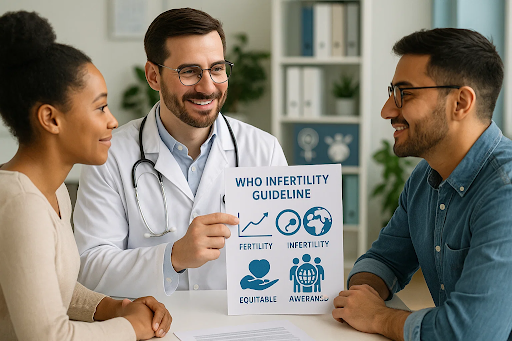
The World Health Organization (WHO) has released its first-ever global guideline on infertility, calling on countries to expand access to safe, equitable, and affordable fertility care for all individuals and couples.
Infertility affects an estimated 1 in 6 people of reproductive age—yet access to proper testing and treatment remains limited. In many regions, fertility services rely heavily on out-of-pocket payments, pushing individuals into financial hardship. In some countries, a single round of in vitro fertilization (IVF) can cost twice the average annual household income.
>>>NHS Warns of Long-Term Omeprazole Risks<<<
A Global Call for Equity
“Infertility is one of the most overlooked public health challenges of our time and a major equity issue globally,” said Dr. Tedros Adhanom Ghebreyesus, WHO Director-General. He noted that millions are left without care, forced to choose between their financial security and their hopes of having children. The WHO is urging nations to adopt the new guideline to ensure access to affordable, respectful, science-based care.
>>>7 Crucial Health Screenings Everyone Should Prioritize<<<
What the New Guideline Includes
The guideline outlines 40 key recommendations focused on preventing, diagnosing, and treating infertility. It encourages countries to integrate fertility care into national health systems, including public financing models that reduce cost burdens.
Key themes include:
People-Centered, Evidence-Based Fertility Care
Infertility is defined as the inability to conceive after 12+ months of regular unprotected sex—a condition that can cause deep emotional, social, and financial strain.
The guideline promotes:
- Accessible clinical pathways for diagnosing male and female infertility
- Assessing patient preferences when selecting treatment options
- Progression from simple, low-cost interventions (fertility education, timing guidance) to advanced treatments (IUI, IVF)
Stronger Focus on Prevention
WHO emphasizes early education on fertility, age-related fertility decline, and risk factors. Prevention efforts should be integrated into:
- Schools
- Primary healthcare
- Reproductive health services
Major risk factors that need urgent attention include untreated STIs and tobacco use. WHO recommends lifestyle changes—healthy diet, physical activity, and quitting smoking—for those planning or trying to conceive.
Mental Health Matters
The emotional burden of infertility can lead to anxiety, depression, and social isolation. The guideline calls for ongoing psychosocial support to be a core component of fertility care.
Adapting to a Changing World
Countries are encouraged to tailor the guideline to local healthcare systems and continue monitoring progress. Implementation requires collaboration among:
- Ministries of Health
- Healthcare provider organizations
- Civil society
- Patient advocacy groups
Dr. Pascale Allotey, Director of WHO’s Department of Sexual and Reproductive Health, stressed that infertility care must be grounded in gender equality and reproductive rights, empowering individuals to make informed choices about parenthood.
>>>Check out FDA Reverses Long-Standing Menopause Hormone Guidelines<<<
Looking Ahead
While comprehensive, the guideline highlights evidence gaps and the need for future recommendations. Upcoming versions are expected to address:
- Fertility preservation
- Third-party reproduction
- Treatment considerations for people with pre-existing medical conditions
>>>Cognitive Workouts That Slow Brain Aging: Science-Backed Techniques <<<