
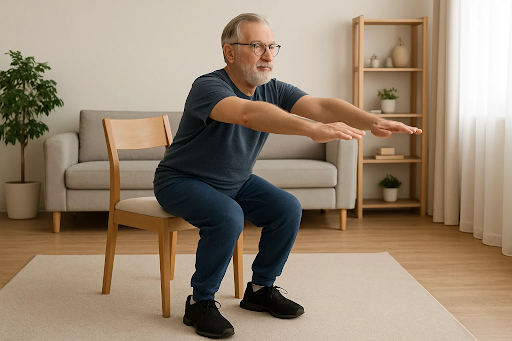
Getting enough exercise is key to maintaining good health — especially as we age. But for many, finding time for workouts amid busy schedules can be a challenge. Now, new research suggests that brief bursts of activity — called “exercise snacks” — might be the time-efficient solution we’ve been waiting for.
What Are Exercise Snacks?
Exercise snacks are short bursts of physical activity lasting about 5 minutes or less, performed several times a day. Because they’re quick, flexible, and easy to fit into daily routines, researchers say people are more likely to stick with them compared to long workout sessions.
“When people are asked why they don’t exercise, the most common answers are lack of time and lack of motivation. Exercise snacks directly address both,”
— Miguel Ángel Rodríguez, University of Oviedo, Spain
The study, published in the British Journal of Sports Medicine, found that these small doses of exercise could significantly enhance cardiorespiratory fitness — a measure of how well the heart and lungs supply oxygen during activity — even among otherwise inactive adults.
>>>Explore Study Links Regular Cycling to Reduced Dementia Risk<<<
The Study: How Small Efforts Add Up
Researchers analyzed data from 11 studies across the UK, China, Australia, and Canada, involving 414 adults aged 18–75 who were largely inactive. Participants performed two to ten exercise sessions daily, several days a week, for 4–12 weeks.
The exercises included:
- Stair climbing
- Squats, lunges, and push-ups
- Tai chi and other light resistance workouts
Remarkably, 83% of participants completed their programs, a much higher rate than with traditional high-intensity workouts like HIIT.
>>>Check out Switching Soda for Water Could Help Cut Your Liver Disease Risk<<<
Results: Noticeable Gains in Heart and Lung Function
Even though participants didn’t meet the CDC’s recommended 150 minutes of moderate activity per week, exercise snacks improved:
- Cardiorespiratory fitness in younger adults
- Muscular endurance in older adults
“What’s remarkable is that these gains were achieved with exercise volumes far below current WHO recommendations,” said Rodríguez.
“Small, consistent bouts of movement can meaningfully improve fitness.”
Why It Matters: Every Minute Counts
Health experts agree that any movement is better than none.
“This form of exercise might be an efficient way for busy or sedentary individuals to get at least some cardiopulmonary benefit,” said Dr. Cheng-Han Chen, interventional cardiologist at MemorialCare Saddleback Medical Center, CA.
>>>Check out Breakthrough Drug Combo Extends Life Expectancy in Prostate Cancer<<<
Practical Ideas to Get Started
For people short on time:
- Take the stairs briskly for 3–5 minutes
- Do 10 squats or lunges between tasks
- Try short yoga or tai chi sessions
- Walk fast around your home or office
Older adults can focus on low-impact moves like chair stands, light resistance bands, or balance exercises.
“Any opportunity throughout the day to move, even briefly, can make a meaningful contribution,” Rodríguez emphasized.
>>>See also “Smoking, Vaping, and Nicotine Pouches May Raise Type 2 Diabetes Risk”<<<