
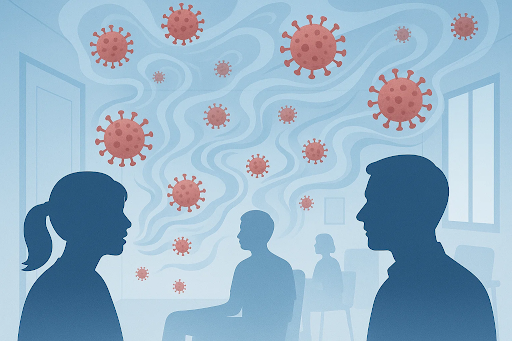
COVID-19 is caused by the SARS-CoV-2 virus (Severe Acute Respiratory Syndrome coronavirus 2). It spreads through infectious aerosols that are exhaled by infected people — including those who have no symptoms at all. About half of all transmission is presymptomatic or asymptomatic. These tiny particles float in the air like smoke and can linger for hours, even after an infected person has left the room. Anyone, regardless of vaccination status, can become infected and spread the virus.
COVID is not “just a cold.” Even when the initial illness seems mild, the infection can have serious and long-lasting effects on people of any age. After entering through the respiratory tract, the virus spreads into the vascular system, damaging blood vessels and potentially affecting multiple organs. It can also impact the brain, contributing to issues such as “brain fog,” and raising the risk of neurological conditions like dementia and psychiatric disorders. COVID can weaken the immune system, leaving a person more vulnerable to other infections.
>>>Related Prenatal COVID-19 Infection Linked to Higher Autism Risk in Children<<<
Long COVID
Long COVID describes the wide range of complications that can persist or emerge after infection. These can include cognitive, cardiovascular, pulmonary, gastrointestinal, dermatologic, musculoskeletal, reproductive, immunological, and psychiatric symptoms. It is now a major cause of chronic illness and disability.
Risk increases with reinfections — the more times someone gets COVID, the more likely they are to develop Long COVID. Currently, there is no specific treatment or cure. Avoiding infection is the only guaranteed way to prevent Long COVID.
>>>Related COVID-19 Vaccines May Offer Unexpected Tumor-Fighting Benefits for Cancer Patients<<<
Common COVID Symptoms
Symptoms can vary widely. They may include:
- Muscle aches
- Sore throat
- Diarrhea or vomiting
- Rashes
- Conjunctivitis
- Fever
- Loss of smell
- Cough
A person can be contagious before symptoms appear — or may never show symptoms at all.
>>>Check out Plastic Pollution’s Hidden Reach: From Oceans to the Human Body<<<
How to Prevent COVID
You can significantly reduce your risk by:
- Wearing a well-fitted respirator (N95) in indoor or crowded settings
- Improving air quality with ventilation and HEPA filtration
- Staying up to date on vaccinations to reduce severe illness
- Testing before and after gatherings or potential exposure, keeping in mind that early false negatives are common
- Staying home when sick or testing positive
- Avoiding repeated infections, which lowers your risk of long-term complications
Preventing COVID is possible — and each layer of protection helps keep yourself and others safer.
News Desk news.uloscah.com